
Batok: Filipino Marks
Traditional hand-tapped markings, reinterpreted.
These patterns were once hand-tapped into the skin as a living archive of identity and protection. Now, I’m letting those same lines live on canvas, carrying forward the stories that colonization couldn’t erase
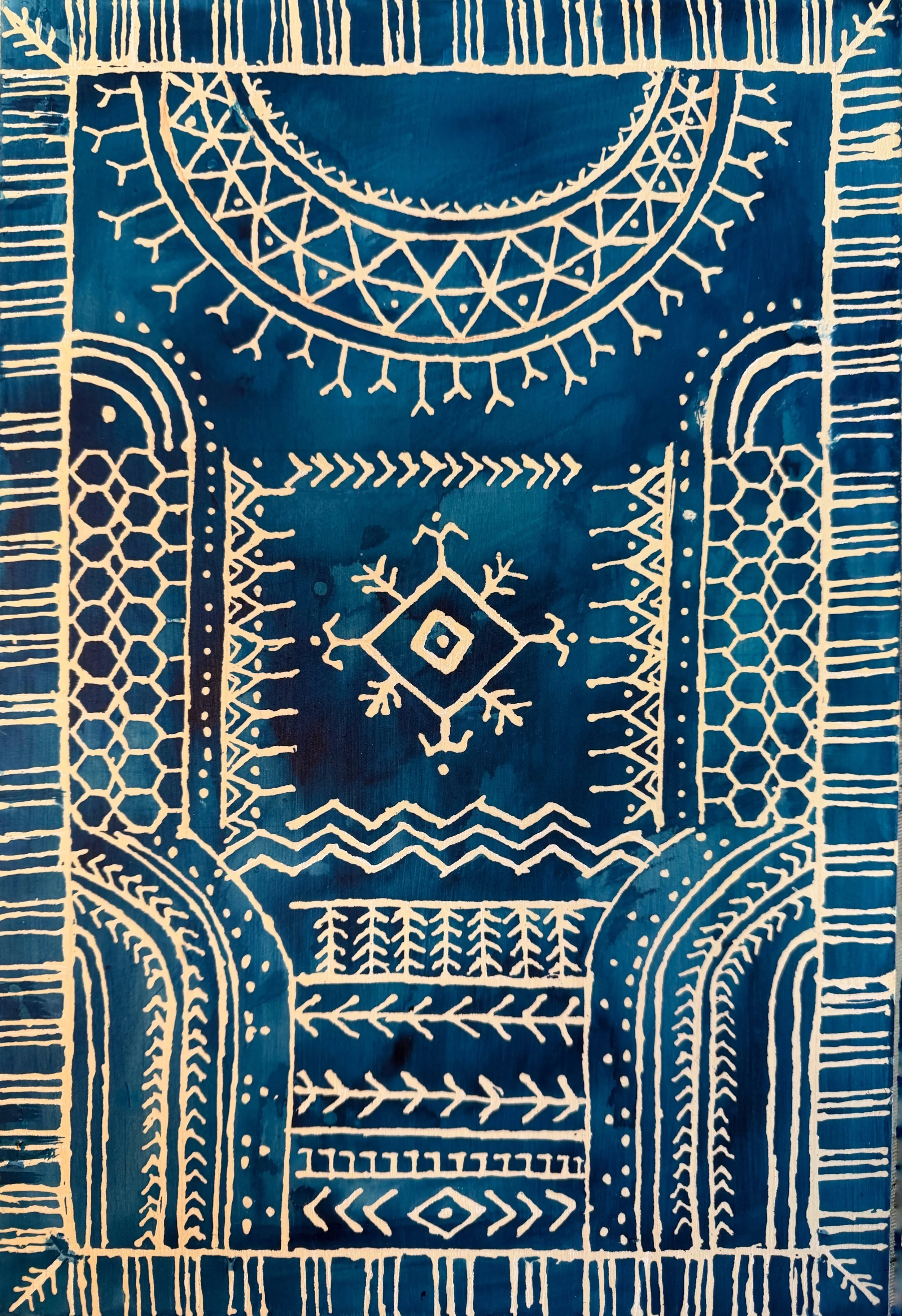
At the center, the crab symbol represents adaptability and the ability to move through challenges from unexpected angles. The surrounding snakeskin patterns serve as protective armor, symbolizing vigilance and transformation. The centipede motif (gayaman) brings strong spiritual defense, believed to guard against harm and malevolent spirits.
The repeating arrowheads and snake-tongue lines speak of direction, decisiveness, and the power to cut through obstacles. The fern designs honor growth, healing, and the continual renewal of the self. Finally, the rice and crop patterns echo abundance, nourishment, and the blessings that come from perseverance and labor.
Together, these symbols create a layered narrative of protection, adaptability, and the enduring strength found in both nature and tradition.
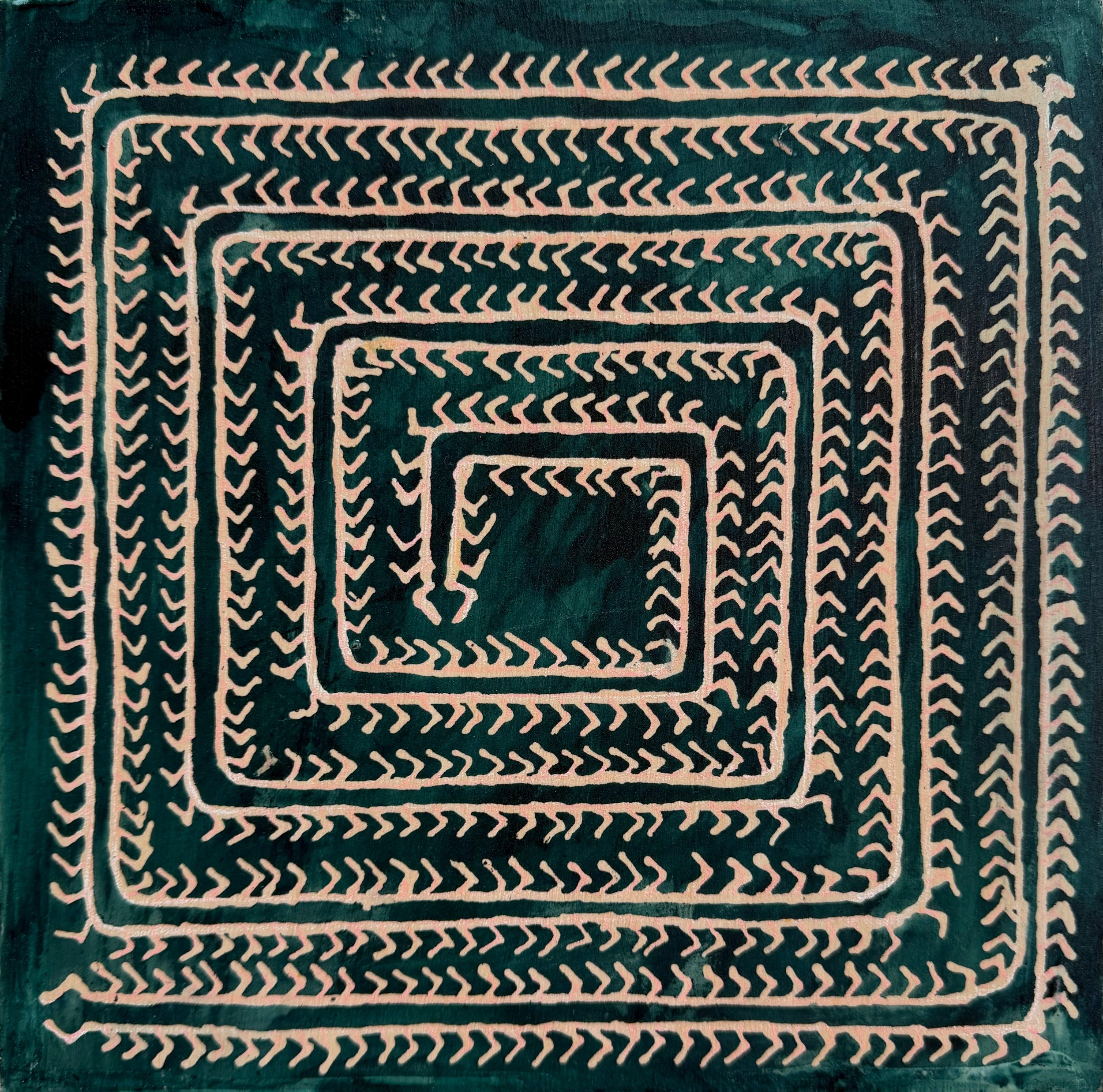
In traditional Philippine tribal tattooing (specifically in the
Cordilleras), the gayaman (centipede) is honored as
a powerful guardian. Its venom, fierce nature, and
constant movement made it a symbol of protection,
resilience, and spiritual defense. The centipede was
believed to shield warriors and women alike, warding off
harm and guiding them through danger.
The centipede’s continuous, winding path reflects the
belief that the gayaman forms a living boundary of
protection. This unbroken pattern represents endurance,
vigilance, and the strength to survive hardship while
remaining unyielding.
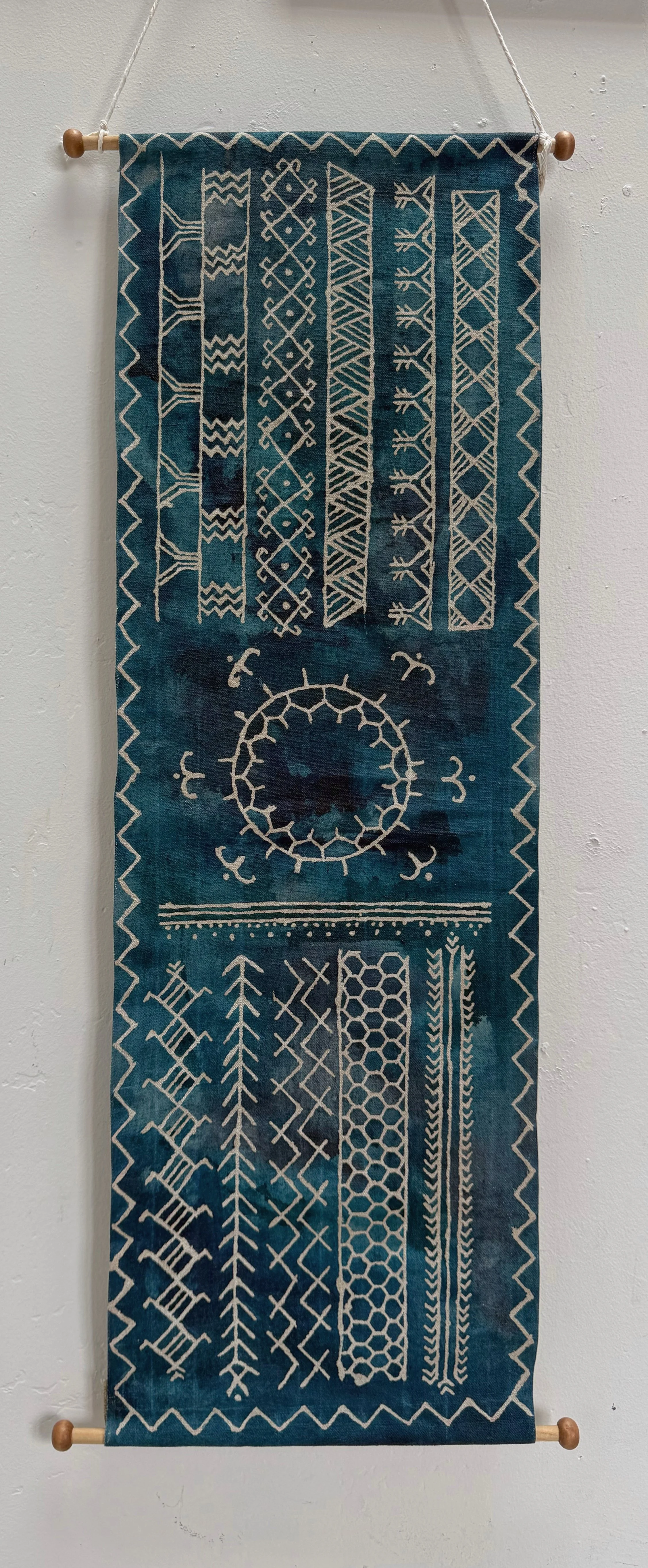
At its center, the sun and moon symbol represent balance and the rhythm of life, watched over by standing eagles that guard the path. Surrounding them, the centipede, snakeskin, and serpent motifs—all drawn from traditional tribal tattoo patterns of pre-colonial Philippines—offer layers of protection, resilience, and transformation.
The lightning pattern speaks of sudden change and inner power, while the rice crop patterns honor abundance and the rewards of perseverance. The repeating crab symbol reflects adaptability and armor, and the fern designs symbolize healing and renewal. The ladder pattern marks progress—each step a movement upward, each rung a story of growth.
Together, these symbols map a life protected, challenged, nourished, and continually moving upward.